Login
Login


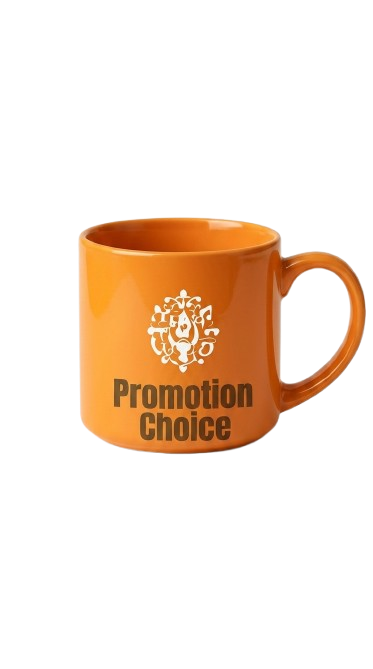
Custom ceramic mugs are best for durable, desk-friendly branded drinkware that gives you a larger print area, a more premium feel, and repeated visibility in offices, schools, hospitality settings, and gift programs.
Custom ceramic mugs are reusable drinkware pieces made from fired ceramic materials and decorated with a logo, message, or artwork. Buyers usually choose them when they want a practical item with everyday use, stable indoor performance, and a better perceived value than many disposable drinkware options.
Quick picks: best ceramic mug types for common buyer goals

If you need a fast answer before comparing details, use this shortlist:
- For office welcome kits: standard ceramic mugs with a simple one-color or two-color imprint.
- For executive gifts or donor appreciation: larger-capacity ceramic mugs with a cleaner layout and more restrained branding.
- For cafés, diners, and hospitality settings: sturdy everyday mugs that prioritize handle comfort and easy stacking/storage.
- For school or nonprofit fundraising: classic capacity mugs with bold, easy-to-read art that prints cleanly.
- For holiday campaigns: ceramic mugs paired with custom coasters or kitchen-adjacent items from kitchen supplies.
- For indoor event tables: ceramic mugs work best when the giveaway is meant to feel more substantial than custom paper cups or custom plastic cups.
What custom ceramic mugs are, and when they are the right choice
Ceramic mugs sit in a specific part of the promotional drinkware ecosystem. They are not the best fit for every campaign. They are the right fit when the item will mostly be used indoors, stored at a desk, taken home, or distributed as a keepsake rather than consumed once and discarded.
Ceramic mugs typically win when these factors matter most:
- perceived quality
- daily repeat use
- comfortable hot beverage handling
- larger uninterrupted branding area
- office, hospitality, and home use
- lower likelihood of looking temporary or event-only
They are usually a weaker fit when these factors dominate:
- ultra-lightweight handout needs
- outdoor carry convenience
- break-resistance in transit-heavy programs
- stadium or concession distribution
- very high-volume, low-retention campaigns
If you need something more portable, compare this category with promotional travel tumblers and custom sports bottles. If you are building a full tabletop or breakroom setup, also see drinkware and custom coasters.
Primary shop link
Browse the full selection here: Printed Ceramic Mugs
Ceramic mug size and variant table
The exact SKU mix on a category page may vary, but ceramic mug buying usually comes down to a few practical tiers
|
Option |
Best for |
Pros |
Watch-outs |
|
Small ceramic mugs (around espresso or compact desk sizes) |
coffee bars, tasting programs, small gift sets |
compact footprint, lower fill volume, easy to pair with boxed kits |
less print area, may feel too small for general office use |
|
Standard ceramic mugs (commonly around 10–12 oz) |
offices, nonprofits, schools, reception areas |
familiar size, broad audience fit, balanced print area and handling |
less “premium gift” impact than oversized mugs |
|
Large ceramic mugs (commonly around 14–16 oz or more) |
executive gifts, home use, hospitality, higher-perceived-value campaigns |
bigger presence, larger visual branding area, stronger gift feel |
heavier, higher storage volume, not ideal for every mailer |
|
Bistro-style or rounded mugs |
hospitality, café look, cozy lifestyle branding |
softer silhouette, premium look, strong for lifestyle photography |
some curved surfaces can constrain detailed art placement |
|
Straight-wall classic mugs |
broad commercial use, simple logo programs |
easier artwork handling, predictable visibility, familiar stacking profile |
less distinctive shape than specialty styles |
|
Specialty ceramic drinkware, including stein-adjacent options |
themed programs, celebrations, restaurant promotions |
more memorable format, event personality |
more niche; can overlap with custom beer steins depending on use |
How to choose custom ceramic mugs step by step
1) Start with the actual drinking context
Ceramic mugs perform best for coffee, tea, cocoa, and desk beverages. They are usually chosen for indoor environments where users are sitting, not moving constantly, and not prioritizing spill-resistant lids.
Choose ceramic first when the use environment is:
- offices and cubicles
- conference rooms
- teacher lounges
- waiting rooms
- hotel dining or in-room service
- donor or employee appreciation kits
- retail gift merchandise
2) Choose capacity based on drinking habit, not just price
Capacity affects the experience more than many buyers expect.
- 10–12 oz range: safest general-use choice for offices and events.
- 14–16 oz range: better for gift positioning, premium perception, and bigger visual presence.
- very small sizes: only use when the drinking style clearly supports it.
A common mistake is choosing the largest mug available for every audience. Bigger mugs feel premium, but they also take more shelf space, weigh more, and may not fit office cabinet routines as easily.
3) Match the mug shape to the artwork
Shape affects print success.
- Straight walls usually handle simpler logo placement more predictably.
- Rounded silhouettes feel premium but may be less forgiving for tight text layouts.
- Taller profiles can make vertical art or stacked text work better.
- Wider mugs can suit broader marks and horizontal lockups.
4) Decide whether the campaign is gift-first or utility-first
This changes the ideal spec.
- Gift-first: larger capacity, cleaner design, fewer design elements, stronger packaging consideration.
- Utility-first: standard size, durable everyday form, easy-read imprint, broad user compatibility.
5) Think about breakage risk before finalizing quantity
Ceramic is durable in daily use, but it is still breakable. That changes:
- shipping expectations
- event transport planning
- reserve quantity
- storage handling
- packaging requirements
For distributed programs, add a practical overage buffer rather than ordering to the exact headcount.
Decision table: use case to recommended mug setup
|
Use case |
Recommended size |
Recommended material approach |
Best print style |
Why it works |
|
Employee onboarding |
standard 10–12 oz |
everyday ceramic mug |
1-color or 2-color logo |
broad appeal, easy desk adoption |
|
Executive appreciation |
14–16 oz |
premium-feel ceramic with cleaner silhouette |
minimal logo, refined lockup |
larger visual presence and gift feel |
|
School fundraiser |
standard size |
classic ceramic |
bold school mark with simple text |
readable art, practical resale appeal |
|
Café or diner promo |
standard or large |
hospitality-friendly ceramic |
front logo with limited copy |
familiar guest experience |
|
Holiday gift bundle |
standard or large |
ceramic mug plus companion add-on |
seasonal art with simple contrast |
bundle-friendly and giftable |
|
Trade show leave-behind for select prospects |
standard size |
ceramic only for targeted distribution |
bold logo plus short URL |
stronger perceived value than disposable cups |
|
Community donor thank-you |
standard or large |
classic ceramic |
event or campaign mark |
durable keepsake use |
|
Home-office campaign |
large preferred |
comfort-focused ceramic |
large, centered artwork |
repeated household visibility |
Best use cases for custom ceramic mugs
Ceramic mugs are not a one-size-fits-all giveaway. They are strongest where the environment supports repeated use and where the user is likely to keep the item.
Offices and employee programs
Ceramic mugs are one of the most natural items for desks, breakrooms, and hybrid work gift kits. They suit coffee-heavy environments and create repeat impressions without needing replacement after one use.
For office gifting, mugs bundle well with:
Hospitality and foodservice-adjacent promotions
Hotels, cafés, diners, and restaurant campaigns often use ceramic mugs because the item fits the beverage ritual. The right mug helps the brand feel established instead of temporary.
Fundraising and nonprofit merchandise
Ceramic mugs work well when the product needs to feel usable enough that people will pay for it, keep it, and use it at home. This is different from handout items that are mainly for fast reach.
Holiday or seasonal campaigns
Ceramic mugs can anchor a seasonal bundle. They pair especially well with kitchen and home-adjacent categories rather than outdoor-only items.
Relevant seasonal and companion paths:
Targeted event gifting rather than mass event pouring
At events, ceramic mugs usually make more sense for VIPs, staff gifts, sponsor gifts, speaker gifts, or booth follow-up packages than for general beverage service. If you need lightweight distribution, compare against custom foam cups, custom paper cups, and custom plastic cups.
Branding and print tips for ceramic mugs
Branding on ceramic mugs is more forgiving than on many narrow or heavily contoured drinkware shapes, but artwork still needs discipline.
Use fewer elements than you think
A mug is handled at close range. That means a clean logo, short campaign line, or simple mark often performs better than crowded design.
Prioritize contrast
Because mugs are seen indoors under mixed lighting, high-contrast art usually reads better than subtle tonal differences. Dark-on-light or light-on-dark layouts tend to outperform low-contrast palettes.
Match design complexity to imprint method
For fine detail, small type, gradients, and multi-color art, confirm the decoration method supports that level of detail. For simple logos and direct marks, straightforward imprint approaches are often enough.
Respect handle and viewing angle
The handle changes how the design is seen:
- front-facing logo placement is best when presentation matters
- side placement can work when handedness or wrap effect matters
- full-wrap style needs cleaner spacing logic
- avoid placing critical small text where fingers or the handle interrupt it
Keep text readable at normal use distance
As a rule, ceramic mugs work best when the primary brand message is legible without rotating the mug repeatedly. If the design depends on micro-text, it is too dense.
Need more artwork help later? A dedicated support article like Ceramic Mug Printing Artwork Rules should become a core cluster page.
Ceramic material notes buyers should know
Ceramic mugs are valued for:
- heat-friendly beverage use
- solid hand feel
- stable tabletop performance
- familiar household acceptance
- premium perception compared with disposable drinkware
But they also require awareness of:
- breakability under drops or impact
- heavier shipping weight than lightweight drinkware
- storage volume
- occasional surface/finish differences by mug style
Quantity planning: practical baselines for ceramic mug orders
Most mug orders go wrong on quantity because buyers either order too close to headcount or forget the replacement/breakage variable.
Use these practical planning baselines:
- Internal team programs: order about 5–10% above confirmed headcount.
- Gift or donor programs: add 8–12% if distribution happens across multiple locations.
- Hospitality or recurring use environments: plan by station count, plus backup units for breakage and replacement.
- Fundraising resale: start with a conservative first run tied to realistic sales velocity, not total audience size.
- VIP event gifting: order to invitee count plus a small reserve for late additions and damaged units.
Simple planning rule
If the mugs will be:
- shipped once to one office, use a smaller buffer
- split across locations, add more reserve
- transported to an event, add more reserve
- paired into kits, confirm packaging before locking quantity
Ordering exactly 100 for 100 intended recipients is usually too tight for ceramic.
Turnaround and logistics: what buyers should expect
Ceramic mugs are not rush-proof by default. Production timing depends on mug availability, imprint method, quantity, proofing, and transit distance. Keep planning grounded:
- Allow more time for larger quantities.
- Allow more time for multi-color or full-wrap decoration.
- Allow more time when shipping to multiple destinations.
- Build in proof approval time.
- Avoid last-minute artwork changes once production is queued.
For event installations or booth setups, pair planning with related event support categories like trade show table covers when the mugs are part of a broader presentation.
Mistakes to avoid when buying custom ceramic mugs
1) Choosing mugs based only on unit price
A lower unit cost can become a weaker buy if the mug feels too small, prints poorly, or does not match the audience.
2) Using complex artwork on a mug shape that needs simpler layout
Curved surfaces punish cluttered design.
3) Ordering exact headcount with no buffer
Ceramic needs practical reserve planning.
4) Treating mugs like outdoor carry drinkware
If portability matters most, a mug may lose to promotional travel tumblers.
5) Ignoring storage footprint
Larger mugs look strong in photos but take more cabinet and shipping space.
6) Picking oversized mugs for general office distribution without checking fit
Not every user wants a large-format mug.
7) Overbranding the print area
A mug gets used often. Designs that feel too loud can reduce long-term use.
8) Forgetting companion-item logic
For gifting, mugs often work better as part of a small set. Good companions include custom coasters, promotional notebooks, and custom tote bags.
FAQ: custom ceramic mugs
What size ceramic mug is best for most promotional orders?
For most general-use promotional programs, a standard mug in the 10–12 oz range is the safest choice because it balances usability, print area, and storage practicality.
Are ceramic mugs better than tumblers for office gifts?
Ceramic mugs are often better for desk use and hot beverages, while tumblers are better for portability and spill resistance. Office-first programs usually lean ceramic.
Do ceramic mugs work for trade shows?
They work best for targeted gifting, VIP handouts, sponsor gifts, or post-show follow-up, not for fast high-volume aisle distribution.
Are ceramic mugs good for cafés and restaurants?
Yes, when the goal is in-house beverage service, branded table presence, or merchandise with a familiar dining feel.
What kind of artwork prints best on ceramic mugs?
Simple logos, strong contrast, readable text, and uncluttered layouts usually perform best.
Should I choose a large mug for every order?
No. Larger mugs feel premium, but standard sizes are more universal and easier for everyday office use.
How many extra mugs should I order?
A practical buffer is usually 5–12% depending on shipping complexity, event transport, and how many locations are involved.
Are ceramic mugs a good fit for schools and nonprofits?
Yes. They can work well for fundraising, recognition, staff appreciation, and school-spirit merchandise when the design is clear and audience fit is strong.
What are the best companion products for ceramic mugs?
Common companions include custom coasters, promotional notebooks, and kitchen supplies.
When should I not choose ceramic mugs?
Avoid them when the campaign depends on ultra-lightweight transport, outdoor mobility, or very high-volume disposable beverage service.
 October, 2026